As the end of the financial year (EOFY) approaches, tax planning becomes essential for tradies. Whether you’re a builder, plumber, electrician, mechanic, painter or contractor, taking action before 30 June can help reduce your tax bill, improve cash flow, and keep your business compliant with the ATO.
Many tradies miss out on legitimate deductions simply because they leave things too late or their records aren’t organised. EOFY tax planning allows you to:
- Claim the right deductions
- Reduce taxable income
- Avoid penalties and surprises
- Improve business cash flow
- Start the new financial year with confidence
Below are six practical tax planning strategies to help you prepare before the deadline.
1. Bring Forward Deductible Expenses
If you’re planning to purchase tools, equipment, safety gear, or work technology, buying before 30 June may allow you to claim a deduction this financial year.
Common deductible expenses include:
- Tools and machinery
- Protective clothing and PPE
- Mobile phones and data plans
- Software subscriptions
- Office supplies
Depending on current ATO rules, you may be eligible for the instant asset write-off on qualifying assets.
2. Review Vehicle and Travel Claims
Your work vehicle is often one of your biggest deductions. Ensure your logbook is current and your business-use percentage is accurate.
You may be able to claim:
- Fuel and servicing
- Insurance and registration
- Repairs and maintenance
- Depreciation
- Tolls and parking
If your work patterns have changed, your claim method may need updating.
3. Organise Your Business Records
Good record-keeping is the foundation of strong tax planning. Before EOFY:
- Reconcile bank accounts
- Collect missing receipts
- Record all income
- Confirm supplier and subcontractor payments
- Review insurance and phone expenses
Clean records reduce stress and help protect you in case of an ATO audit.
4. Boost Your Super and Save on Tax
Making additional superannuation contributions before 30 June can lower your taxable income while growing your retirement savings. Contributions must clear into your fund before the deadline to be deductible.
This strategy is especially useful in profitable years.
5. Review Debtors and Stock Levels
Chasing overdue invoices can improve cash flow before EOFY. You may also be able to write off bad debts in some cases.
If you hold stock, reviewing inventory ensures accurate financial reporting and smarter purchasing decisions next year.
6. Get Advice from a Tax Professional
Tax rules change regularly. A quick EOFY check-in with your accountant or bookkeeper can uncover additional deductions, ensure compliance, and help structure your business efficiently.
Final Thoughts
EOFY tax planning doesn’t need to be complicated. A few smart steps before 30 June can lead to meaningful tax savings and a stronger financial position for your business.
Start early, stay organised, and get professional advice to make the most of this financial year.
✅ If you’re a tradie who wants clearer numbers and better control over your business finances, working with an accountant who understands trade businesses can make a huge difference.
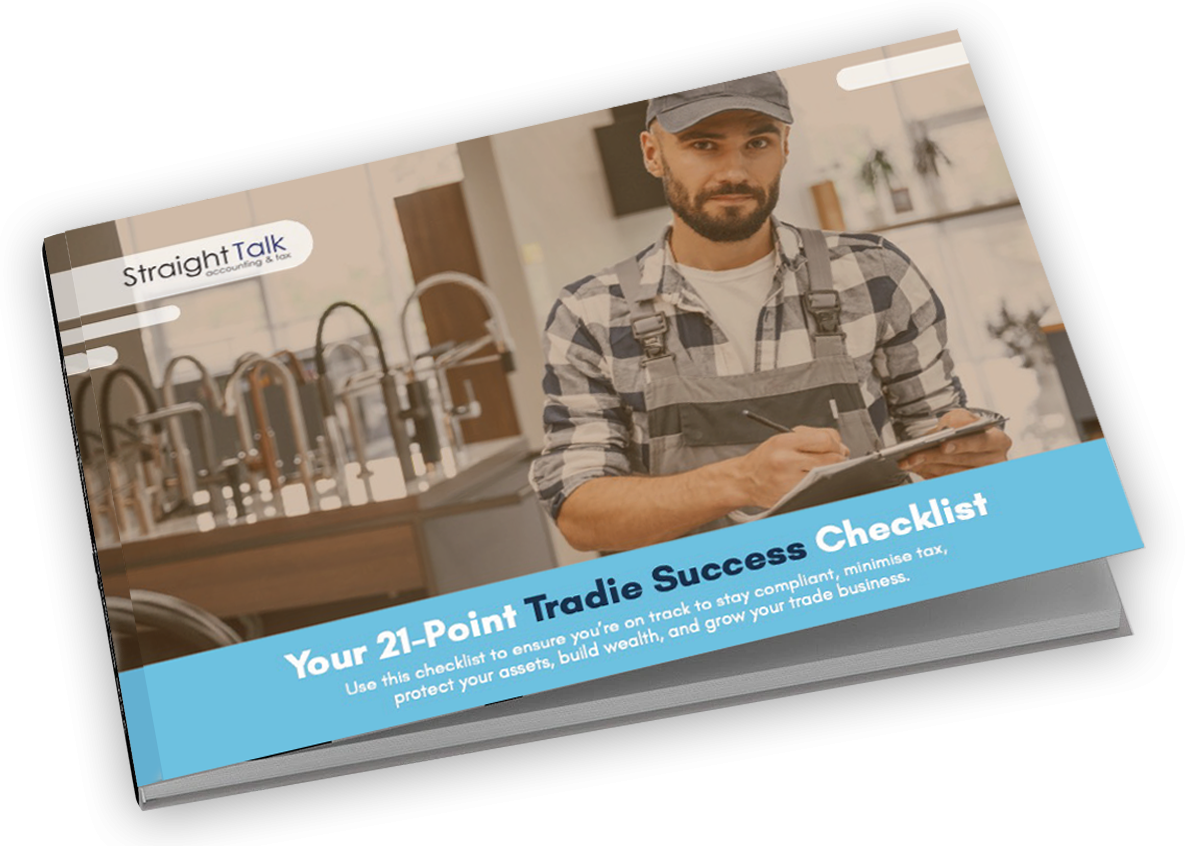
👉 Download our FREE 21-Step Tradie Success Checklist or book a free intro session to get started.
Please Note: Many of the comments in this publication are general in nature and anyone intending to apply the information to practical circumstances should seek professional advice to independently verify their interpretation and the information’s applicability to their particular circumstances.